
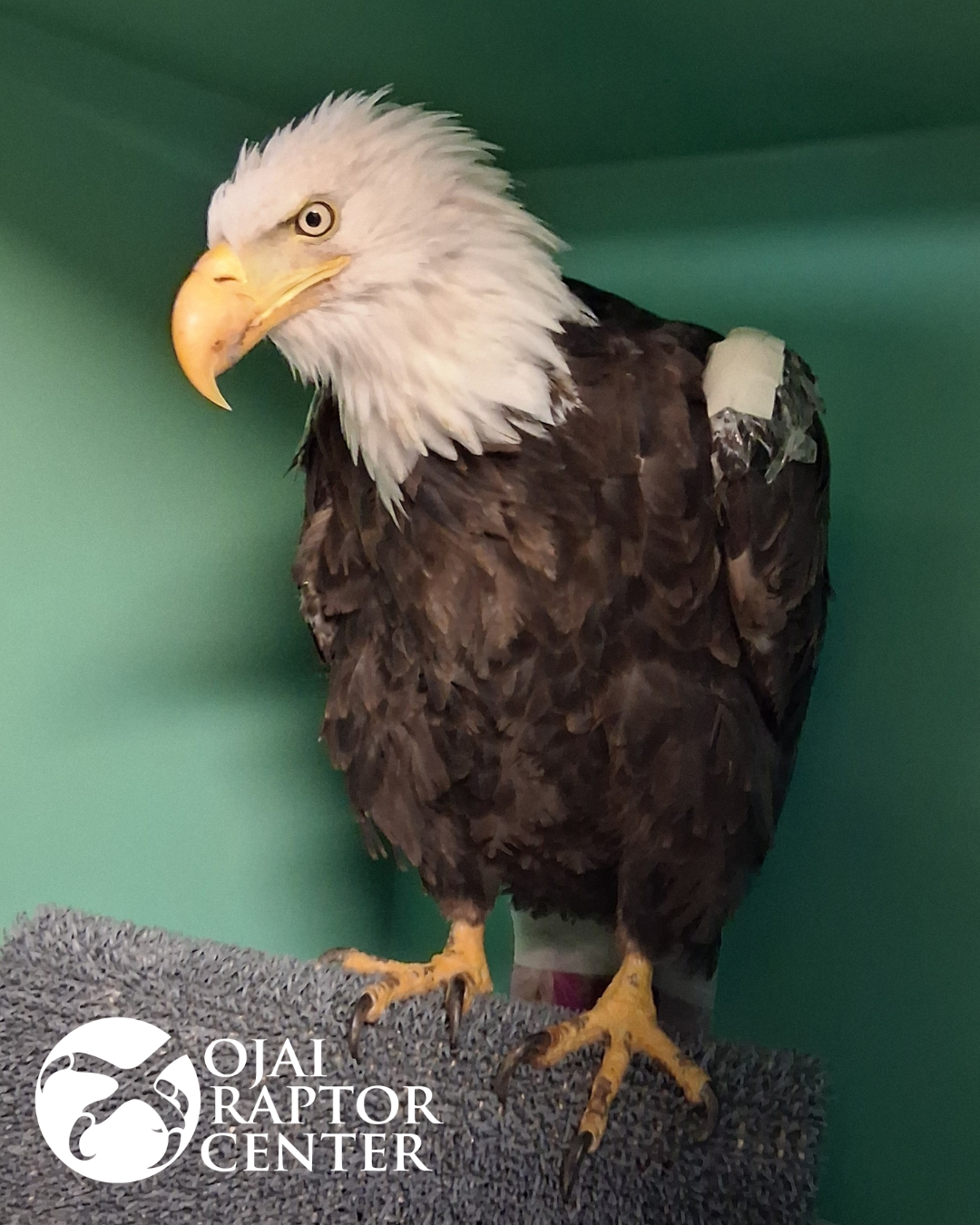
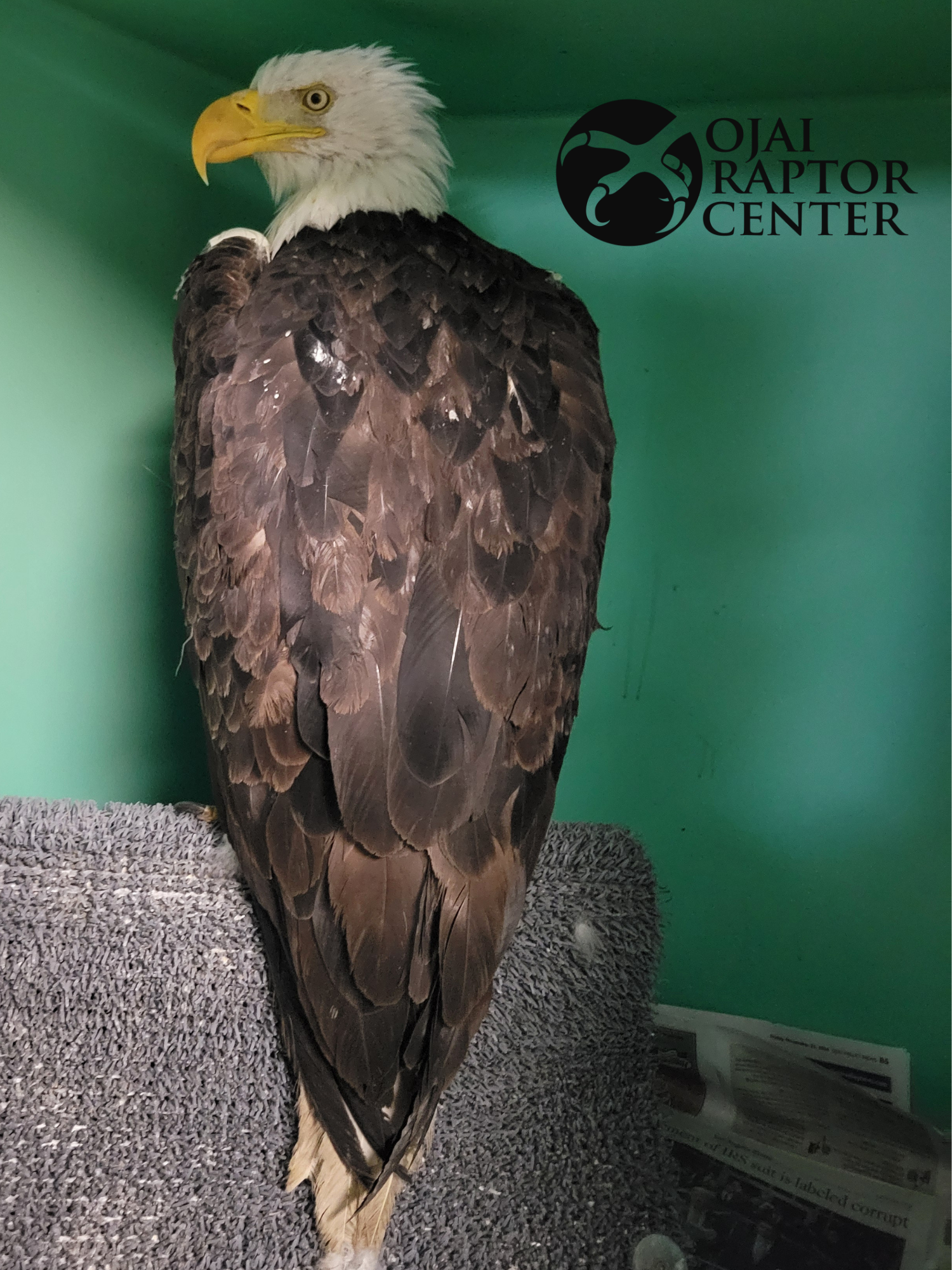
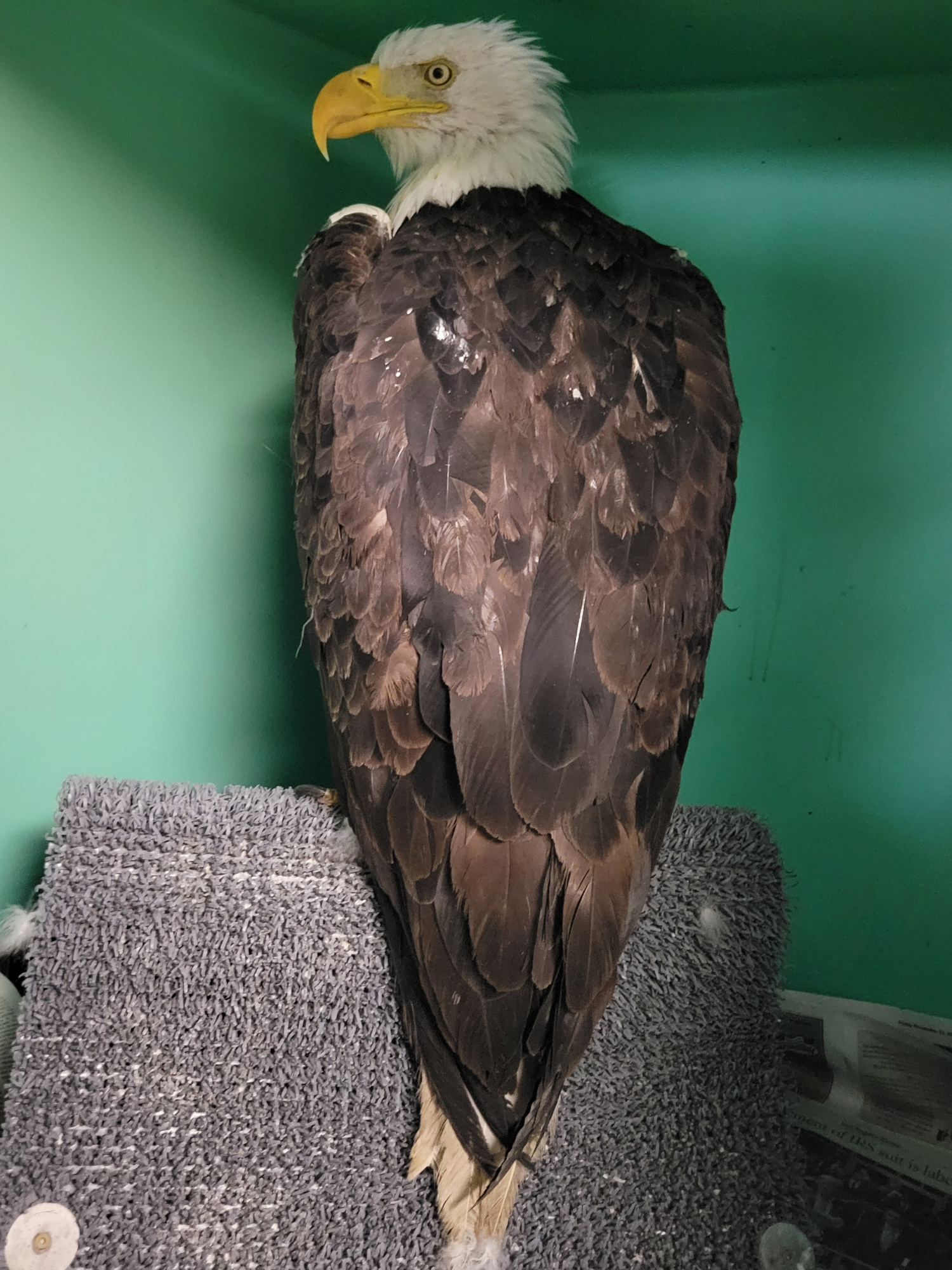
Bald Eagle Patient 26-519
Known publicly as Jackie
Letters can be sent to:
Ojai Raptor Center, PO Box 182, Oakview, 93022
“Caring for Jackie has been a great responsibility and an extraordinary privilege. I could not be prouder of our team and the remarkable collaboration of veterinarians, specialists, wildlife agencies and partner organizations who came together on her behalf.
Throughout her time in our care, her welfare remained at the center of everything we did. While we are heartbroken by her loss, I am grateful to everyone who contributed their expertise, time and compassion to her care. We are also deeply grateful for the way Patient 26-519 brought people together through a shared love of wildlife.”
Chris Eksteen - Executive Director - Ojai Raptor Center
Resources
-
Frequently Asked Questions
Answers to common questions about Patient 26-519, including her care and treatment, wildlife rehabilitation policies and laws, and what happens next.
-
Veterinary Medical Journal
A look at Patient 26-519’s medical journey, including diagnostic testing, treatments, clinical findings, and veterinary updates throughout her time in care.
-
Pictures
A collection of photographs documenting Patient 26-519’s journey and time in care at Ojai Raptor Center.
-
Legacy
See how the extraordinary support inspired by Patient 26-519 is creating a lasting impact for bald eagles, other raptors, and wildlife in need.
Media Release October 14, 2026
California Department of Fish and Wildlife News Release
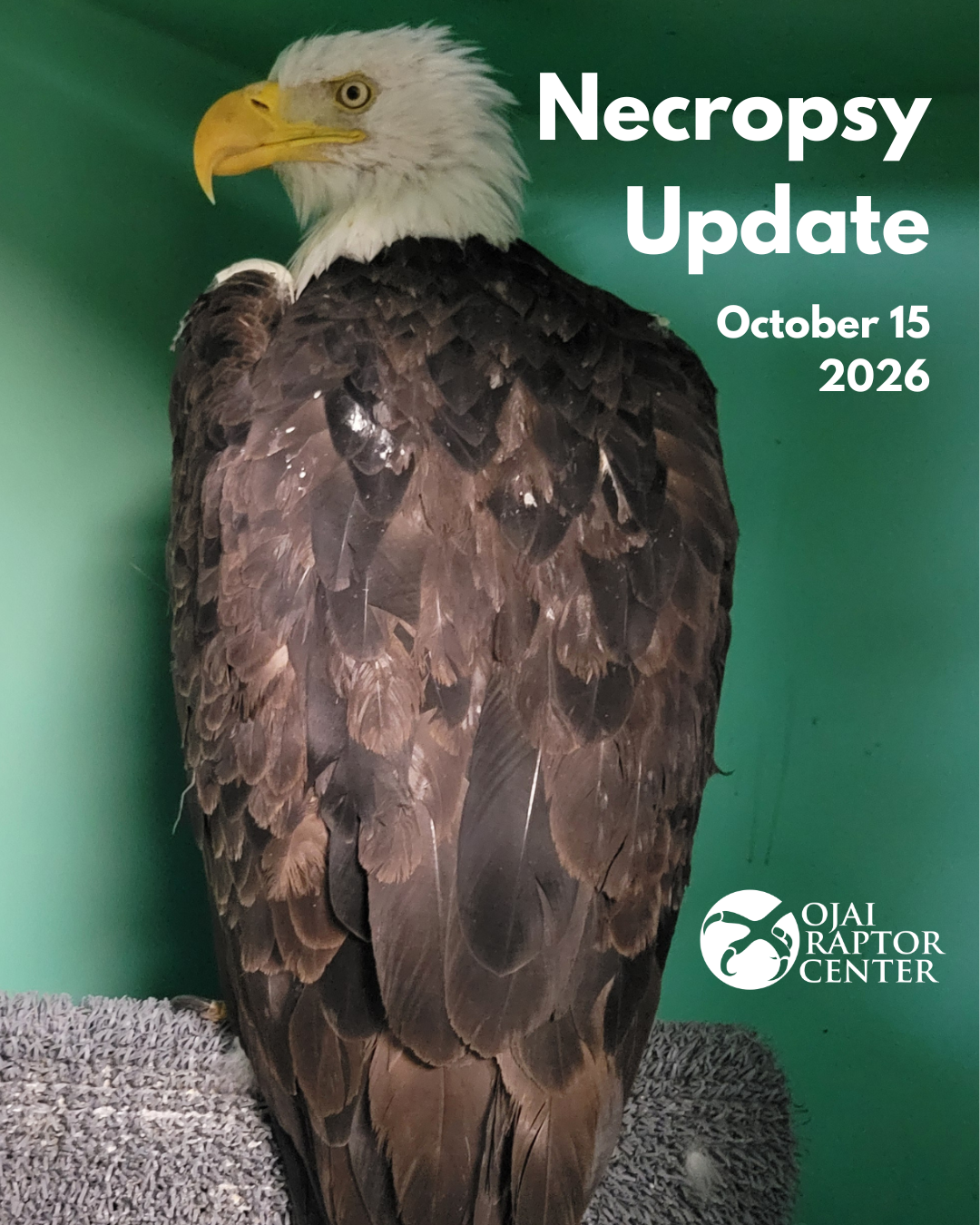
SACRAMENTO – The California Department of Fish and Wildlife (CDFW), in partnership with the San Diego Zoo Wildlife Alliance and Ojai Raptor Center, today released the results of the necropsy and additional diagnostic testing conducted following the death of Patient 26-519, the bald eagle from Big Bear Valley known as Jackie.
The necropsy, performed by veterinary pathologists at the San Diego Zoo Wildlife Alliance, along with extensive additional laboratory and toxicology testing, provided new information about the complex medical condition that led to Jackie’s decline and death.
"Jackie's necropsy confirmed Highly Pathogenic Avian Influenza (HPAI) as the primary underlying cause of her decline," said Steve Kubiski, Director of Disease Investigations, San Diego Zoo Wildlife Alliance. "In an uncommon presentation of the virus, the infection caused a severe ulcer in her stomach that led to persistent internal bleeding, anemia, and the development of bacterial sepsis."
Jackie showed signs of chronic disease involving the ventriculus, the muscular portion of a bird’s stomach, commonly called the gizzard. The damaged and ulcerated tissue contributed to ongoing blood loss and her persistent severe anemia. It also allowed bacteria to enter the body, resulting in a serious secondary bacterial infection. Severe inflammation and blood clot formation were also found in the heart and several major blood vessels. Follow up testing showed that HPAI virus genetic material was present in several tissues throughout her body, including the ulcerated tissue in the ventriculus.
Additional testing showed Jackie was negative for a West Nile Virus infection and heavy metals—including lead—were within acceptable limits and not associated with the identified disease progression. Toxicology screening detected brodifacoum, an anticoagulant rodenticide, in the liver, as well as persistent environmental contaminants. The necropsy did not find uncontrolled bleeding typically associated with anticoagulant rodenticide; therefore, brodifacoum was not identified as the primary cause of illness or death.
Together, the findings showed that Jackie was suffering from multiple severe and interconnected disease processes that had been developing over time and ultimately led to her decline and death.
“The necropsy results have helped connect many of the findings we were seeing throughout the eagle’s hospitalization,” said Chris Eksteen, Executive Director of Ojai Raptor Center. “We are grateful to the many veterinary specialists, laboratories, wildlife agencies and partner organizations who worked alongside our team to understand her illness and provide her with the best possible care. Caring for her was an extraordinary privilege for our entire team.”
Consistent with established procedures intended to prevent the transmission of HPAI to wildlife or humans, the remains were cremated by the U.S. Fish and Wildlife Service’s National Eagle Repository.
“The story of the Big Bear bald eagle reflects the powerful connection people feel to these iconic birds,” said CDFW Director Meghan Hertel. “We’re grateful to everyone who cared for her and worked to support her well-being. Understanding the results of these tests is an important part of learning from this case and can help inform the care and treatment of other eagles and wildlife in the future.”
HPAI is an infectious disease that primarily affects birds and has been circulating in wild bird populations throughout the United States. Waterfowl and shorebirds are natural hosts of avian influenza viruses, while eagles and other raptors may be exposed through contact with infected birds or by consuming infected prey.
Jackie’s death also marked the loss of one half of the iconic bald eagle pair that has occupied Big Bear Valley for years. Her mate, Shadow, remains in Big Bear. Based on camera data, we have no evidence that Shadow or the eaglets were sick.
Jackie’s story brought unprecedented public attention to bald eagles and the importance of protecting the habitats they depend on. Her life and the public’s connection to her highlights the powerful role that wildlife can play in connecting people to conservation.
###
Media Release August 11, 2026
California Department of Fish and Wildlife News Release
SACRAMENTO – The California Department of Fish and Wildlife (CDFW) is saddened to share that Patient 26-519, the bald eagle from Big Bear Valley known as Jackie died in the overnight hours of August 9, 2026, while receiving intensive medical care at the Ojai Raptor Center. Despite periods of temporary improvement and extensive efforts by wildlife rehabilitation experts and veterinarians at the Ojai Raptor Center, Jackie’s condition ultimately continued to deteriorate after more than three weeks of intensive medical care.
In recent days, Jackie experienced additional health challenges, including a large blood clot in her wing and kidney, as well as another decline in her blood values.
Jackie recently underwent additional diagnostic testing, including a contrast CT scan, bone marrow biopsy and specialized testing for heavy metals. Veterinarians at Ojai Raptor Center worked closely with specialists across the country to evaluate the available findings while some test results remained pending. Despite intensive treatment, her prognosis became increasingly poor.
Following a necropsy performed by veterinary pathologists at the San Diego Zoo Wildlife Alliance, the eagle’s remains will be transported to the National Eagle Repository, a one-of-a-kind facility operated by the U.S. Fish and Wildlife Service’s Office of Law Enforcement. The National Eagle Repository receives, evaluates, stores, and distributes eagle remains, parts, and feathers to enrolled members of federally recognized tribes throughout the United States for religious, cultural, and ceremonial purposes. It also offers educational programs that promote understanding and conservation of bald and golden eagles.
“California mourns Jackie, the Big Bear bald eagle who reminded us of the beauty and wonder of California’s wildlife, and our shared responsibility to protect the habitats that sustain it," said Governor Gavin Newsom. “We’re grateful to the Ojai Raptor Center and U.S. Fish and Wildlife Service, who partnered with our California Department of Fish and Wildlife to help Jackie in her time of need."
“Millions of people who will never set foot near Big Bear have watched, for years, as this eagle and her mate raised eaglets, lost eggs, survived extreme weather, fought for their nest — and, most recently, as the eagle fought for her own life. Sharing her story inspired deep care in people and a broader understanding of why conservation matters,” said CDFW Director Meghan Hertel. “While this eagle's story has ended, the inspiration and the lessons she gave so many people won't be forgotten. Our hope is that they inspire greater efforts to protect the wild places eagles and other species need to live out their lives."
Jackie was first admitted to the Ojai Raptor Center on July 18, 2026, after being found grounded. An initial examination revealed Jackie was thin and dehydrated and suffering from severe anemia, low blood protein, and kidney and lung abnormalities.
Immediate veterinary treatment included fluids, oxygen therapy, nutritional support and intensive, round-the-clock monitoring.
On July 22, Jackie received a blood transfusion using donor blood from Spirit, an ambassador bald eagle at the California Living Museum (CALM) Zoo in Bakersfield. Veterinary specialists hoped the transfusion would stabilize her anemia, and while she initially showed temporary improvement, her packed cell volume declined again by August 3. Advanced diagnostic testing showed thrombosis in her wing and near one kidney.
“Throughout Jackie’s time at Ojai Raptor Center, every decision was guided by the available medical evidence, her welfare, and our responsibility to do what was in her best interest,” said Chris Eksteen, Executive Director of the Center. “Though our team is heartbroken, it has been an extraordinary privilege to care for her.”
In summer 2012, Jackie became the first documented bald eagle chick hatched in Big Bear Valley. In October 2015, the Friends of Big Bear Valley installed a livestream nest camera that allowed people an intimate view of wild eagles in the nest. People around the world watched as Jackie and her mate, Shadow, hatched and raised their eaglets beginning in 2018. For several years, Jackie and Shadow were the only year-round bald eagle residents at Big Bear Lake.
“The U.S. Fish and Wildlife Service is saddened by the passing of the beloved Big Bear Lake bald eagle, whose story captured the attention of people across the country and helped foster a deeper connection with wildlife,” said Paul Souza, Regional Director of the U.S. Fish and Wildlife Service’s Pacific Southwest Region. “The public’s connection to this eagle is a powerful reminder of why the conservation of bald eagles matters. We are grateful to our dedicated partners at the California Department of Fish and Wildlife and Ojai Valley Raptor Center for the compassion and expertise they provided throughout the eagle’s care.”
Jackie will be deeply missed by the dedicated wildlife rehabilitation staff, veterinary team, and thousands of people across the globe who spent hours watching and caring for her. CDFW is grateful for the lasting impact Jackie had on countless communities and all who cared for her.
###